Coram Potted History of The Foundling Hospital and Captain Thomas Coram
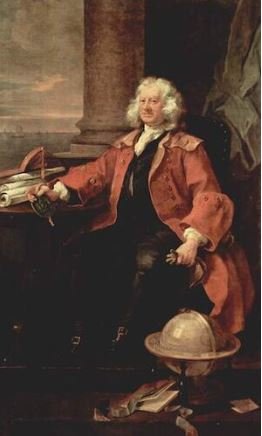
Captain Coram
Thomas Coram was appalled at the sight of abandoned babies on dung heaps during the middle of the 18th century and was determined to do something about it. The mortality rate for children was 74% died before the age of 5. Those born in the workhouse were less fortunate – 90% didn’t survive.
Coram spent 17 years and most of his own money trying to get a petition for The Foundling Hospital. There was considerable opposition from the aristocracy who were more concerned with fighting the French and regarded children as the responsibility of the parents. He tried a different approach and managed to get 30 titled ladies to sign his petition and gained the sympathy of Queen Caroline. The Foundling School opened in 1734 until 1952.
They looked after 27,000 and kept meticulous records of all of them.
The Coloured Ball Balloting System
This system was adopted when the establishment realised they couldn’t cope with the huge demand for places. If the mother drew out a white ball her child would be accepted. If she drew out a black ball her child would be rejected. If she drew out a red ball there was a slender chance if one of the others failed the medical.
The Coloured Ball Balloting system replaced by The Baby Basket Era.
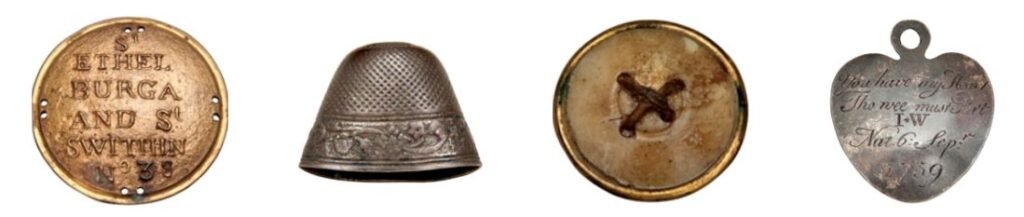
Baby Basket Tokens
The Government agreed to give the school financial support providing they accepted every child brought to them irrespective of their health or background. The babies were placed in a basket with a small token as a means of identifying it in the unlikely event of the mother reclaiming her child.
The government strategy proved to be disastrous with the loss of 15,000 children over a 2 year period. Government support was largely withdrawn and the Foundling School became a private charity once more with stringent medical checks on all applicants.
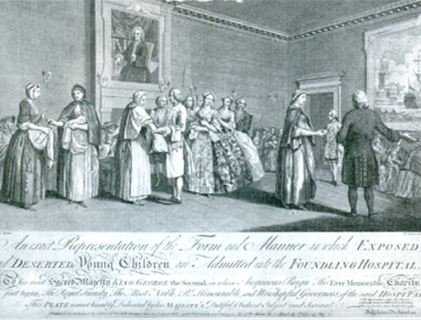
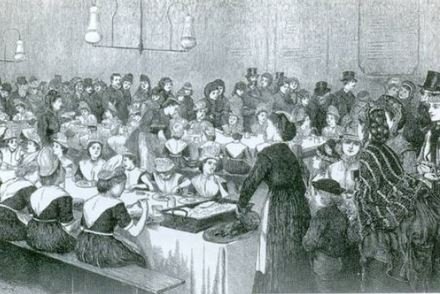
Foundlings at Sunday Lunch
In the early days, the school was open for scrutiny by fashionable ladies.
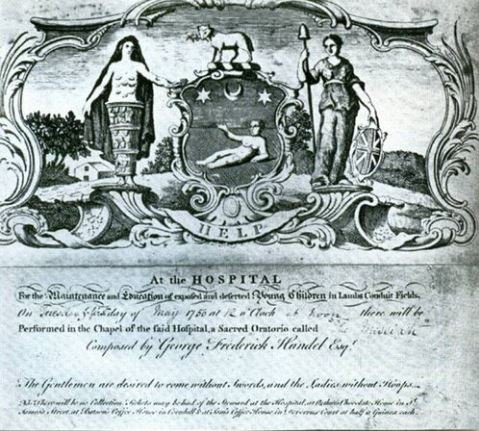
Performance of Handel’s Messiah
This is a copy of an original ticket for Handel’s Messiah. It cost half a guinea, which seems inordinately expensive.
Handel gave the takings to Foundling Hospital Charity. Ladies were requested not to wear their hoops and gentlemen not to bring their swords.
The Starting Point
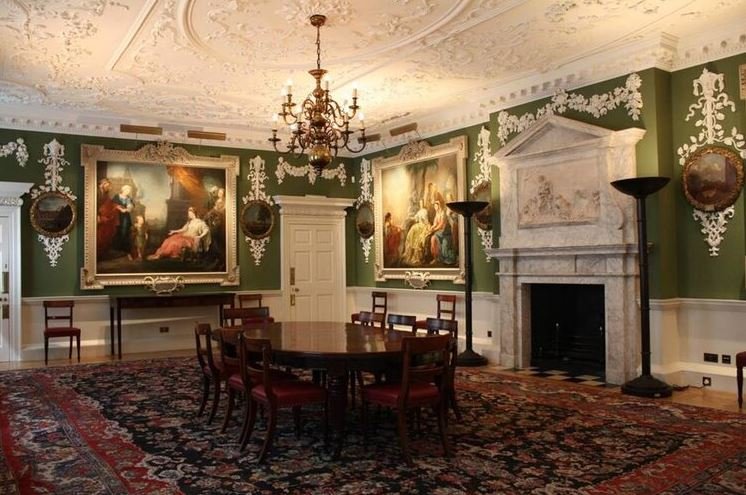
Courtroom, London
This was the starting point for all entrants. They were baptised here given new names and sent out to foster parents in the country. At the age of five they were sent to boarding school. My new name – “Edwin Uphill”.
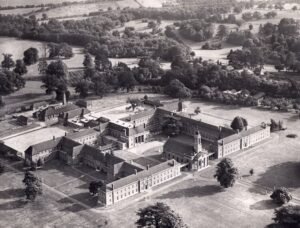
Foundling School Berkhamstead catered for approx. 500 boarders, split equally between girls & boys.
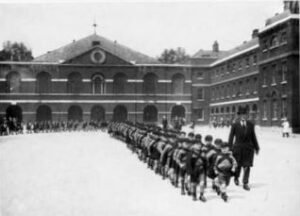
This is the London School with foundlings marching out of the gates for the last time. The premises were sold for a substantial profit and a new school was built in Berkhamstead.
Girls had exercise much the same as the boys. Most would have entered domestic service after leaving school.
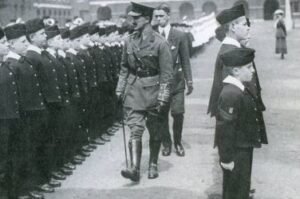
Boy’s on parade.
Military style inspection for the boys who were to become the fighting fodder for the army although many went to Kneller Hall to join the army bands. A few went into agriculture.
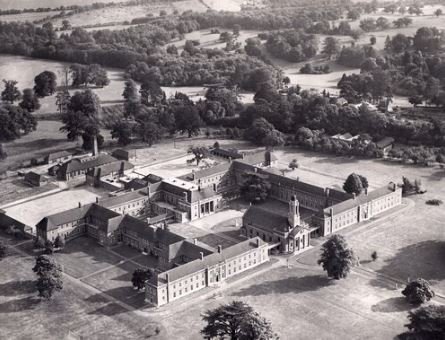
The Shock of Boarding School
Berkhamstead School
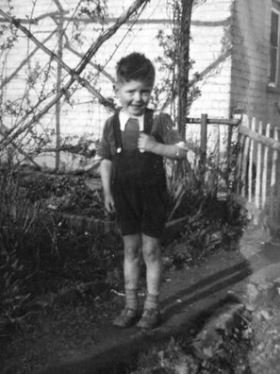
Ready for boarding school (me 5 years old)
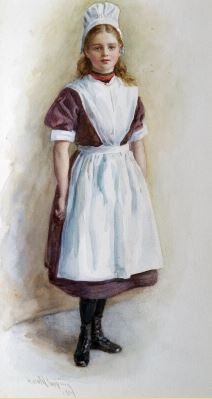
Girl’s Uniform
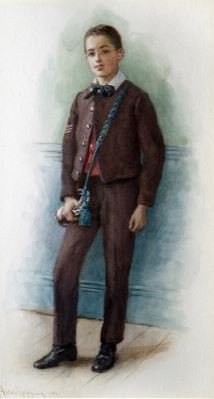
Boy’s Uniform
Very uncomfortable to wear as I recall.
Benefactors
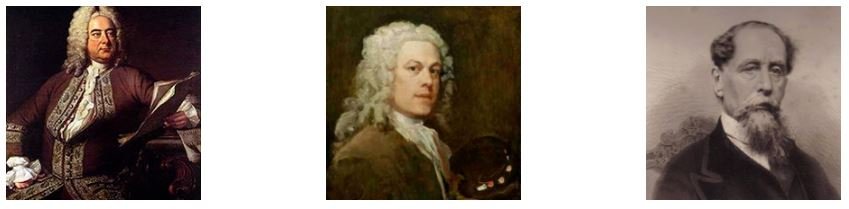
Handel
Hogarth
Dickens
They were closely involved with raising funds and running the school. Much of Dickens writing probably based on his knowledge of the Foundling School.
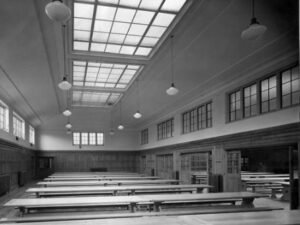
Dining Room
The sliding doors running down the centre were always closed when eating.
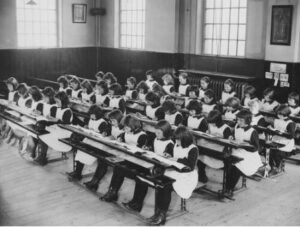
Girls in class – looks like something on another planet
The boys and girls were always separated.
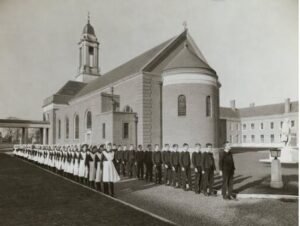
On parade again. We marched everywhere.
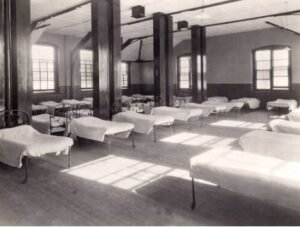
Dormitories
We had to clean and polish the floors. They were always spick & span.
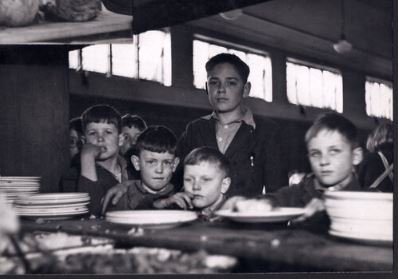
Oliver Twist?
Queuing for food in the dining room at Berkhamstead (I’m the tall lad in charge).
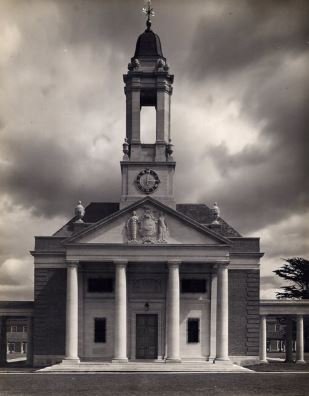
Church at Berkhamstead
I got the cane for playing hide and seek here – the headmaster called it fouling God’s sanctuary.
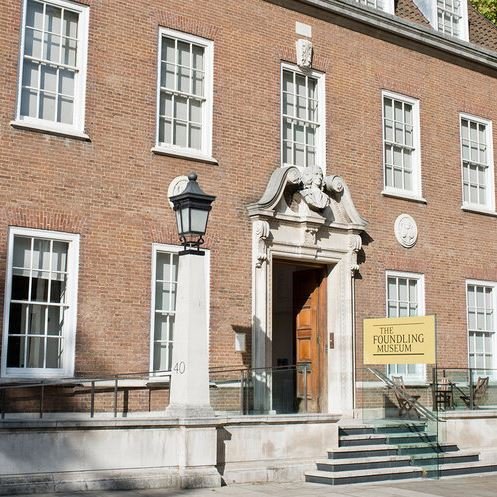
Where I was baptised and given the name ‘Edwin Uphill’.